convexity ladder
Net gamma exposure of classified positions — risk measurement, structural levels, and volatility regimes.
API Endpoints
Access this data from the Options Profile Greeks API endpoint (greek gamma).
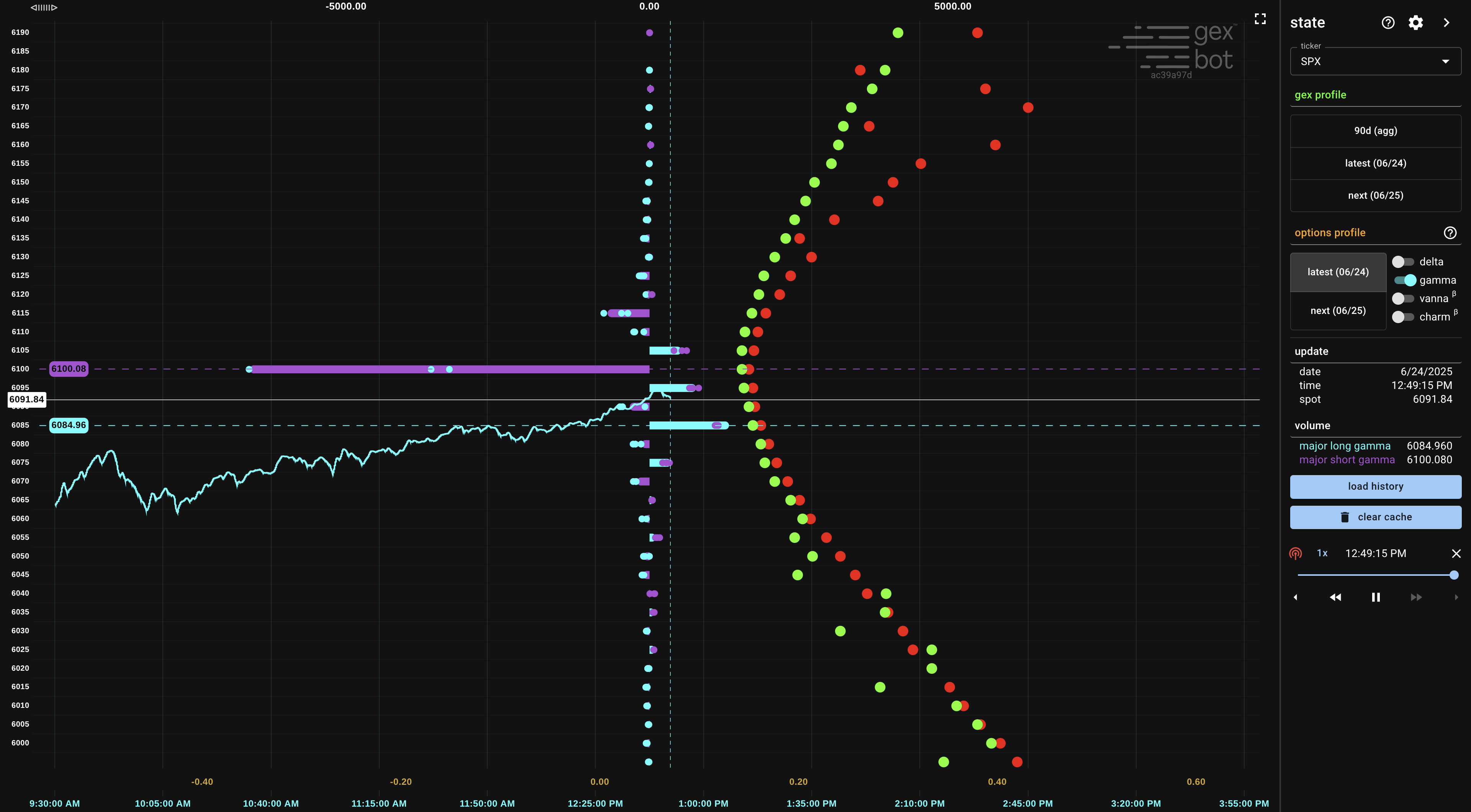
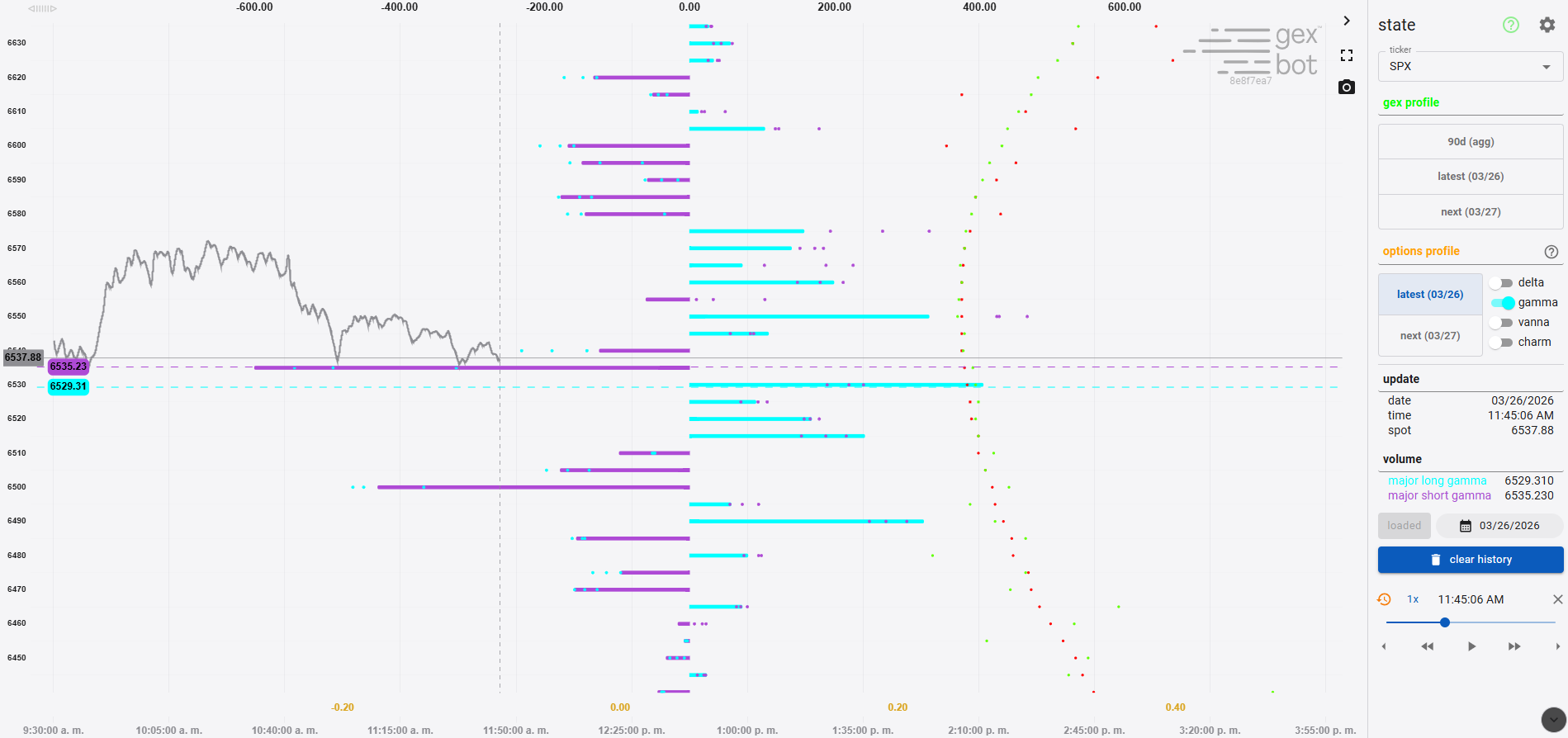
The convexity ladder takes the net imbalance of transactions so far that day and displays the net gamma exposure of those positions. Long calls and long puts represent long taker GEX, while short calls and short puts represent short taker GEX.
We use convexity rather than the simpler "gex ladder" because we want to convey the chart's significance in a more visceral way:
- Positive convexity: Takers own convexity, favoring moves that exceed expectations. Ideally, they want price traveling as far away from their positive strikes as possible.
- Negative convexity: Takers are short convexity, favoring moves that underperform expectations. Ideally, they favor price approaching and resting at their negative strikes.
Reading the convexity ladder is less about discerning direction, and more about measuring risk. For example, our favorite SPY setup (infrequent, but explosive) occurs when a single strike of negative convexity dwarfs all others as spot hovers just above. Being short convexity at the wrong time in a crowded place can cause cascading panic, if given a gentle shove. Perhaps no shove occurs, but one can be ready in case it does.
Using the Convexity Ladder as a Map
When we use the convexity ladder as our map, we can gain an understanding of the terrain—distinguish between mountains and grasslands:
- In a falling volatility environment (most common):
- Positive convexity stalls price.
- We soar right through negative convexity.
- With rising volatility:
- We glide through positive convexity.
- We stall at negative convexity.
In either case, transition points between positive and negative convexity act as pivots: They are where incentives change and traders reshuffle.
Convexity Ladder and the Volatility Environment
An overview of the convexity ladder as a whole, as well as its distribution, can give us an idea of our volatility environment:
- Significant and well-distributed negative convexity: We are trading in liquid markets as traders are happy to sell options. (Concentrated negative convexity is a clear exception.)
- Significant and well-distributed positive convexity: Indicates an elevated and well-informed expectation of volatility. We typically see this prior to days with event-driven volatility.
Note on Pinning
As we head into close, 0DTE negative convexity (taker-sold strikes) acts as a magnet for price due to -vanna and charm effects. More on this in -vanna/charm ladder.