gex profile
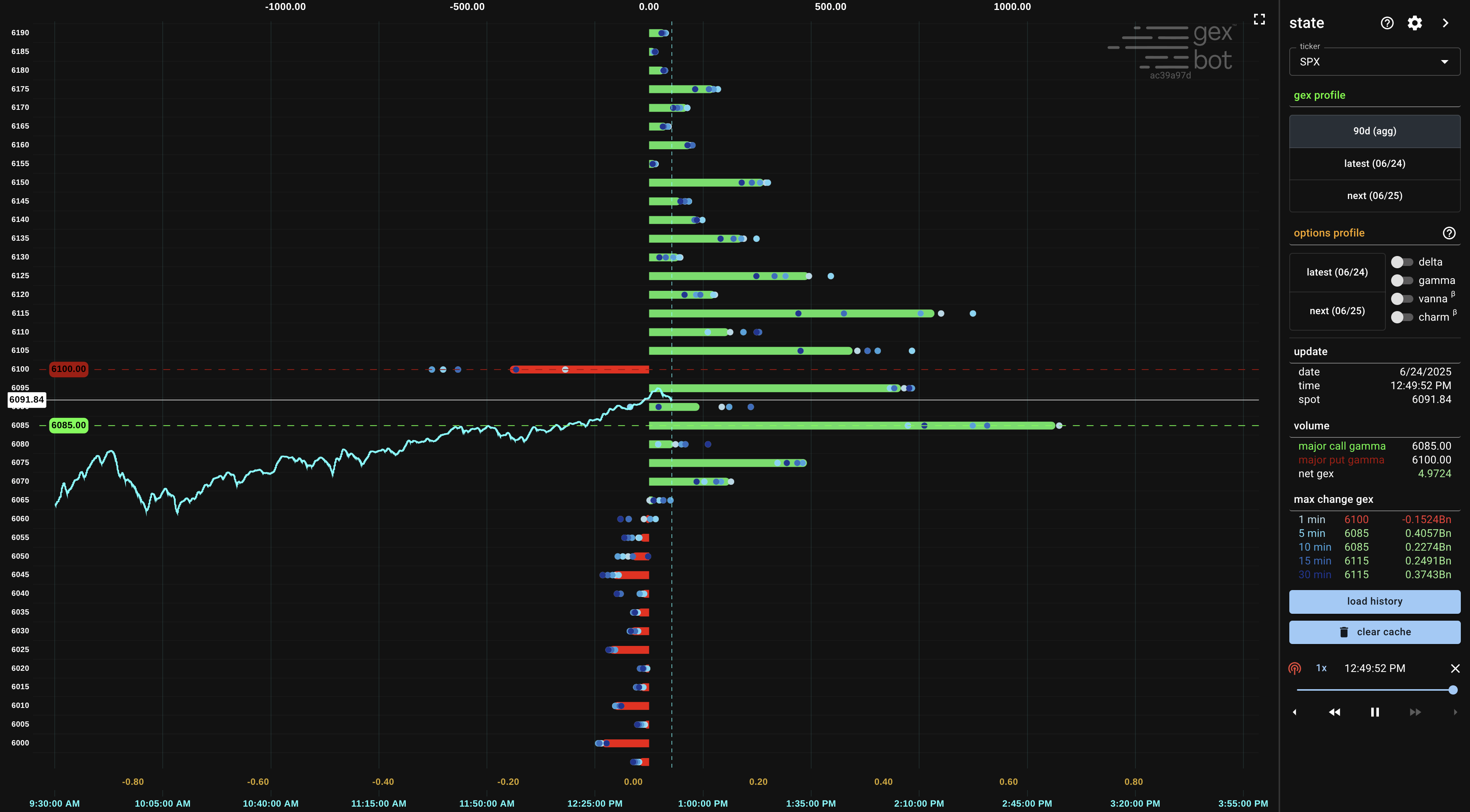
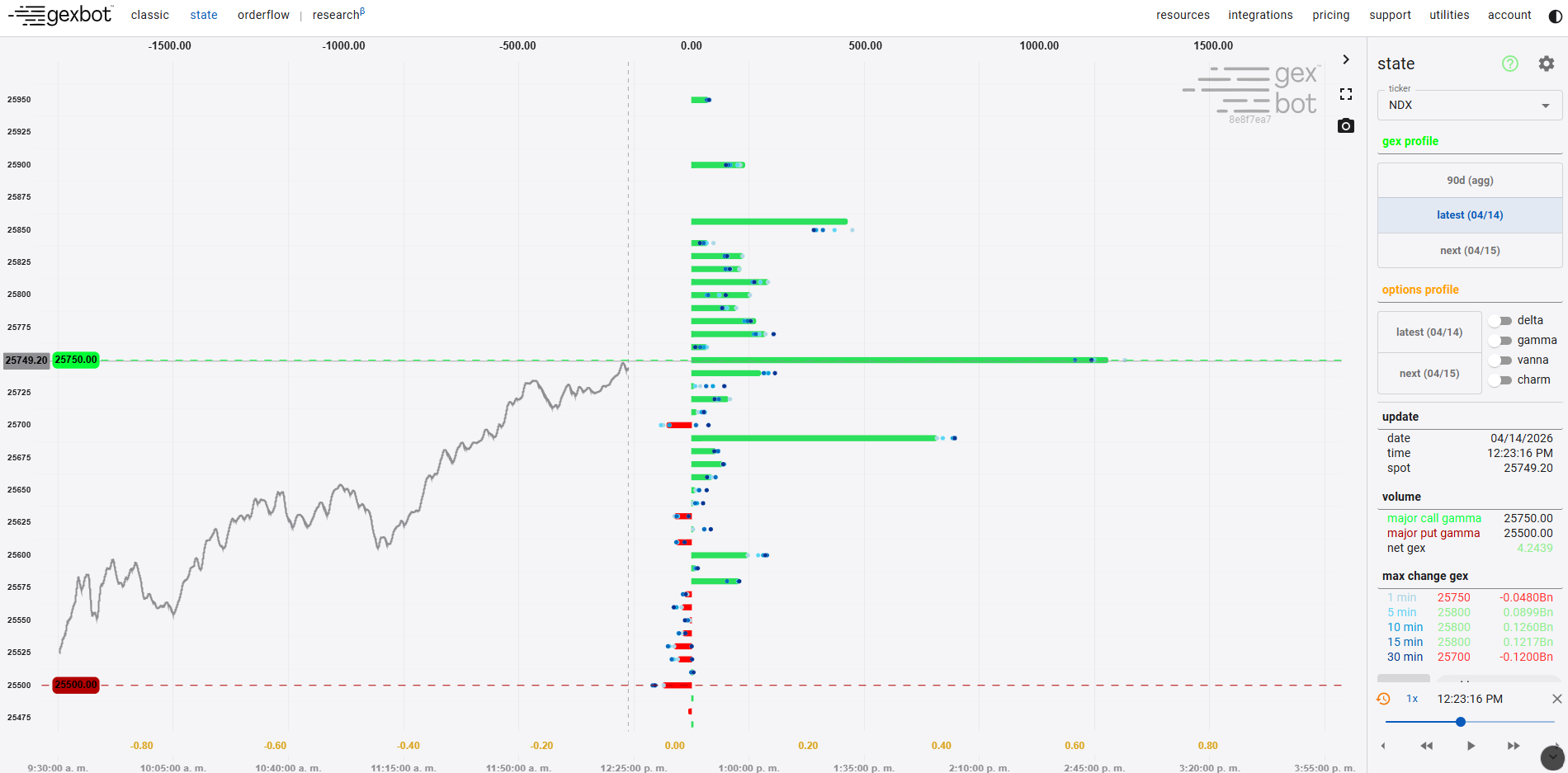
Isolating the greatest inflection points in the market by netting imbalanced call gex against imbalanced put gex.
API Endpoints
Get this data from the GEX Profile API, Major Levels API, and Max Change API endpoints.
The GEX Profile acts as a bridge between gexbot Classic and the State package.
The Options Profile (OP) tracks four separate positions at every strike: taker long calls, taker short calls, taker long puts, and taker short puts. Reading all four positions at once can be confusing when you first transition to State.
The GEX Profile simplifies this complexity. Much like Classic, it condenses classified orderflow into a familiar, single-ladder momentum indicator. It isolates the market's greatest inflection points by netting opposing call and put exposures into a single directional view.
How It Works
- Net Intraday Imbalance: The Options Profile (OP) measures cumulative net transaction flow for the session. When aggressive taker buying matches taker selling, that volume is digested cleanly and nets to zero. When flow is one-sided, a net inventory imbalance accumulates.
- Symmetric Market Pressure: Traditional GEX models focus exclusively on maker hedging, assuming makers hedge mechanically while takers do nothing. In reality, both sides respond dynamically to their incentives. An open imbalance represents real, concentrated risk that someone in the market must manage.
- Directional Squeeze Risk: Because option sellers carry asymmetric risk, large net imbalances create forced adjustment points:
- Net call imbalances squeeze short positions on upward moves.
- Net put imbalances squeeze short positions on downward moves. If a strike has equal net put and net call imbalances, those opposing squeeze forces balance each other out.
- Netting the Profile: The GEX Profile nets imbalanced call exposure against imbalanced put exposure at each strike:
- Net Call Imbalance (Green) extends to the right, marking upside momentum, targets, and call-dominated regimes.
- Net Put Imbalance (Red) extends to the left, marking downside momentum, acceleration triggers, and put-dominated regimes.
Expiration Versions
Select the expiration scope in the sidebar:
- full: Reflects classified orderflow across all expirations within 90 days.
- latest: Reflects classified orderflow in the nearest expiration (
0 DTE). - next: Reflects classified orderflow in the following expiration (
1 DTE).